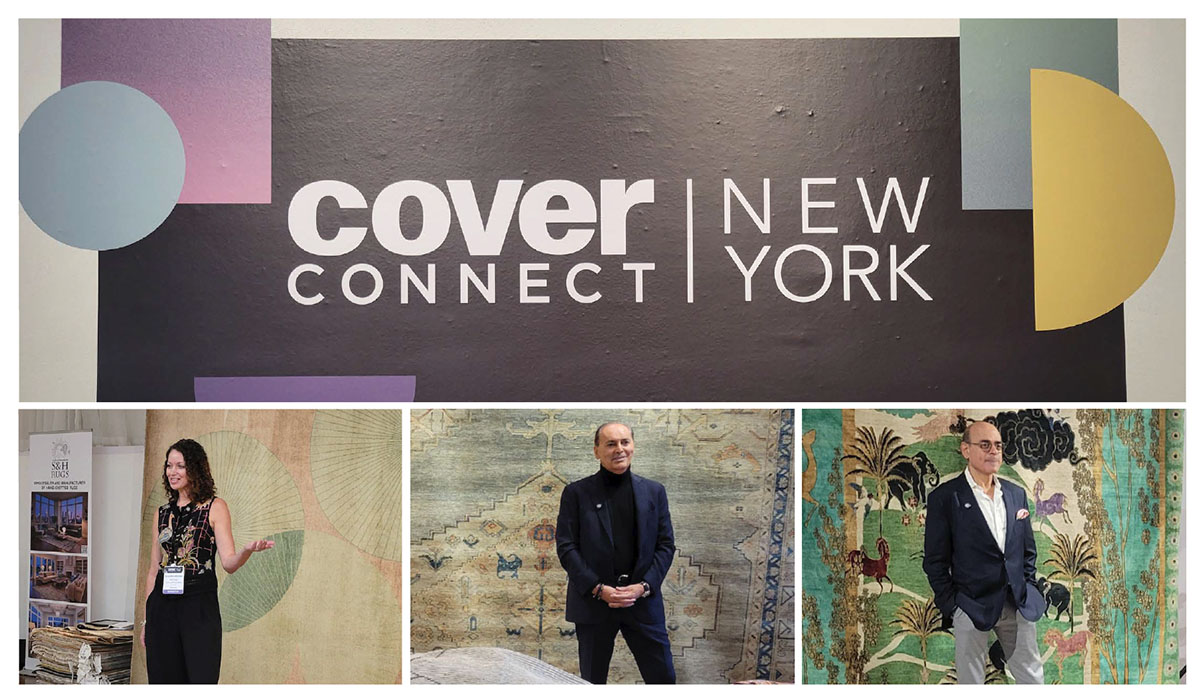
Getting the Pulse of the Rug Industry at COVER Connect NY
We’d like to express a special thanks to all the Rug vendors at Cover Connect New York 2026.





 Rug Insider Magazine
News for the Rug and Carpet Professional
Rug Insider Magazine
News for the Rug and Carpet Professional 
We’d like to express a special thanks to all the Rug vendors at Cover Connect New York 2026.
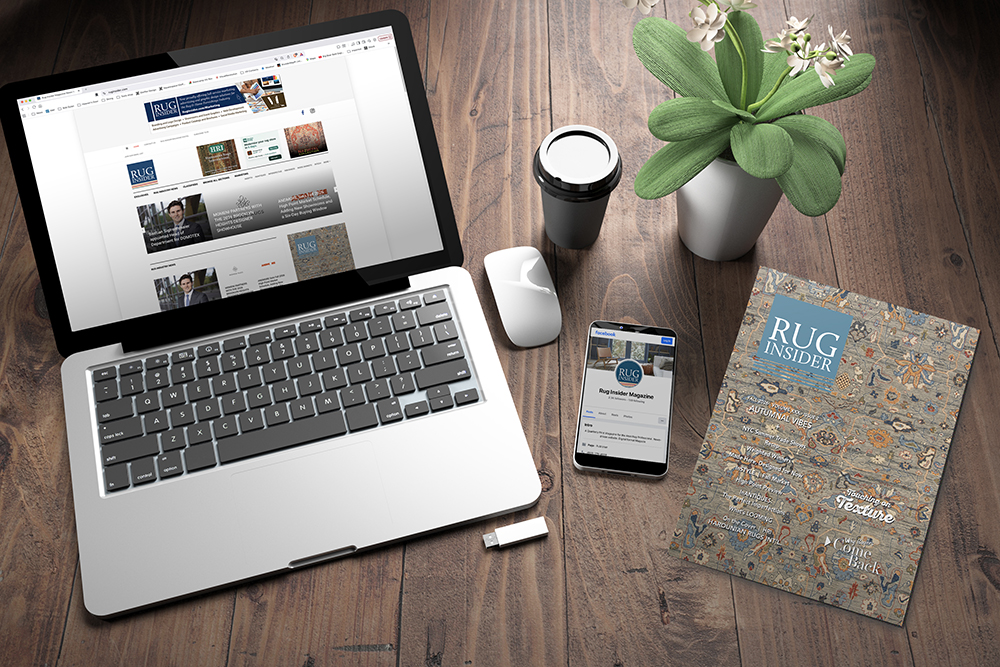
MEREDITH, NH — RugInsider.com, the digital news platform of Rug Insider Magazine, is demonstrating significant reach across the rug and carpet industry, attracting approximately 103,000 site visits and 80,000 unique visitors each month while generating 437,000 monthly page views.
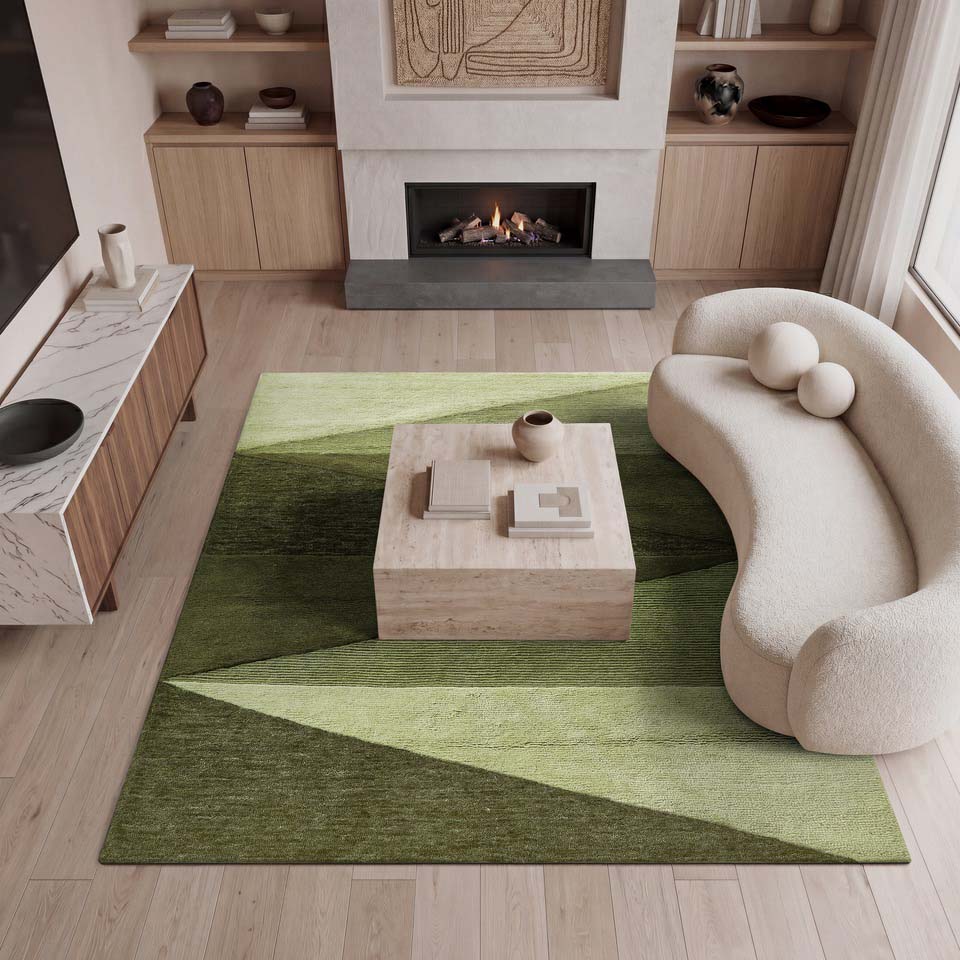
Hicksville, NY – October 2026 For Fall 2026 Kalaty Rug Corporation brings its usual impressive display of new area rugs in all weaves, textures, constructions, décor genres and colors to the company’s High Point Market showroom, IHFC, G369. As is customary, Kalaty’s primary emphasis at this market remains on their heritage hand-knotted collections and additions to best-selling hand-knotted collections; however, at this market Kalaty also plans to promote the upper-tier Luxe-Weave™ hand-finished series of collections. “We are particularly excited about the new Luxe Weave™ collections promotional brochure, which is circulating around the show and being mailed to subscribers around the country this month in FURNITURE TODAY, HOME ACCENTS TODAY and RUG INSIDER.” says Kamran Kalaty, a company spokesman.

New York-founded rug leader brings custom broadloom, ready-to-ship and one-of-a-kind rugs to the showhouse, benefitting the Brooklyn Heights Association.
Brooklyn, NEW YORK (September 30, 2026) – Momeni, a third-generation, family-run leader in rug and carpet manufacturing, joins the 2026 Brooklyn Heights Designer Showhouse as a Patron sponsor, outfitting six designer spaces at One Monroe Place with rugs and custom carpets. The house is presented by the Brooklyn Heights Association (BHA) whose mission is to preserve the neighborhood’s architectural legacy; it opens to the public October 2 through November 1.

Since 1 August 2026, Bastian Siglreithmaier (29) has been responsible for the DOMOTEX, didacta, parts2clean and SurfaceTechnology GERMANY trade fairs as Global Director (Head of Department) within the newly established “Trade and Consumer Fairs” business unit at Deutsche Messe AG.
Hannover, Germany. Since 1 August 2026, Bastian Siglreithmaier (29) has been responsible for the DOMOTEX, didacta, parts2clean and SurfaceTechnology GERMANY trade fairs as Global Director (Head of Department) within the newly established “Trade and Consumer Fairs” business unit at Deutsche Messe AG. In this role, he reports to Hendrik Rawe, Senior Vice President, Deutsche Messe. The respective trade fair teams will continue to be led by the existing Project Directors: Annette Levy (DOMOTEX), Björn Schneeberg (didacta) and Ramtin Randjbar-Moshtaghin (parts2clean, SurfaceTechnology GERMANY). The Project Directors will now report to Bastian Siglreithmaier.
Siglreithmaier has been with Deutsche Messe since 2016, when he began his career at the company on a dual study programme. He subsequently held various roles in international sales, with responsibility for key accounts and partners as well as the planning and organisation of international trade fair participations. Before taking on his current role, he worked in Global Business Development, where he was responsible for the strategic development of the international business, identifying new business opportunities and establishing new event formats worldwide. At the same time, Siglreithmaier completed a Master of Science in Business with International Management abroad (Amsterdam).
“We are delighted that Bastian Siglreithmaier has taken over as Head of Department for DOMOTEX, didacta, parts2clean and SurfaceTechnology GERMANY. He knows Deutsche Messe and the trade fair business from a range of different perspectives. His experience in developing business opportunities and trade fair formats, combined with his strategic outlook, puts him in an excellent position to work with the Project Directors and teams to systematically develop our events further, strengthen their market position and unlock new growth opportunities,” says Hendrik Rawe, Senior Vice President, Deutsche Messe AG.
HIGH POINT, N.C. – September 30, 2026 – ANDMORE will welcome buyers to the Fall 2026 High Point Market, October 17–21, across its 17-building campus spanning 7 million square feet and more than 1,100 permanent showrooms and temporary exhibits. Temporary exhibit space in SALON, Suites at Market Square, and INTERHALL opens one day early, on Friday, October 16, extending the buying window to six full days.

New York, NEW YORK (September 23, 2026) — Creative Matters returns to COVER Connect New York (September 26–28) with an extension of Loominary, a hand-knotted rug collection designed in Toronto and handcrafted in Nepal. Seven new designs and colourways expand the collection into a world of amethyst, sepia, dune, natural and amber, where subtle shifts in colour, texture and pile create surfaces that seem to change before the eye.

HIGH POINT, N.C., Oct. 10, 2026 — WithIt’s “Future of Home” Fall Education Breakfast, presented by Myriad Software, will examine how digital discovery, online and in-store shopping, personalization, brand engagement and emerging technology are reshaping the consumer journey. WithIt, the women’s leadership development network for the home and furnishings industry, will host the breakfast during High Point Market on Sunday, Oct. 18.

HIGH POINT, N.C., Sept. 22, 2026 — WithIt, the women’s leadership development network for the home and furnishings industries, has appointed Cheryl Dobbins Hege director of advancement and marketing. In the role, she will help strengthen industry partnerships and sponsorships, grow membership and engagement, and expand WithIt’s visibility and reach.