



We recently had a visit from an interior designer who was sourcing rugs for her client, and during her selection process, she asked a question that stopped me in my tracks. She said, “Is this rug new? Or vintage? Or antique? What’s the difference?”
Having worked in the antique rug trade for nearly 30 years, the idea of what a vintage or antique rug is has become second nature to me, so I was taken aback when a design professional needed a primer to explain to her the differences between these various rug age categories.
The question stayed with me after the visit, and prompted me to ask around with some colleagues and friends. Sure enough, to my surprise and chagrin, outside of my colleagues in the rug industry, most of the people I spoke with had little to no knowledge as to the differences between the ages of different kinds of rugs, and in some cases, didn’t even know such age categories exist!
This discussion made me realize that a primer with a brief explanation of some of the different age and style categorizations from the area rug trade might be needed, and as such, I’ve put together this list below. How many of them do you recognize? Drop me a line at This email address is being protected from spambots. You need JavaScript enabled to view it. and let me know!
ANTIQUE RUGS
Antique rugs are generally understood to be rugs that are 80–100 years old or older. These are mostly Persian rugs, but there are many wonderful rugs from Turkey, India, China, the Caucusus, Europe, and elsewhere that also are commonly found in this age range. Some people demarcate an antique as saying it refers to rugs from 1900 and before, whereas others extend that time to the 1920s or even 1930s.
VINTAGE RUGS
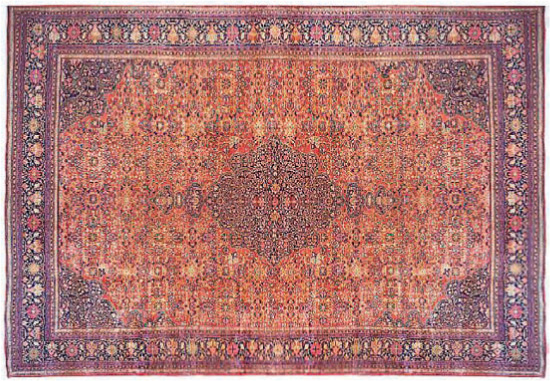
Vintage rugs are typically those that are older rugs, but not quite as old as antique rugs, usually between 30–80 years old, and from the 1930s to 1940s and after. Again, these rugs can be Persian, Turkish, Indian, Chinese, or European, but there are also many fine rugs in this category that are Afghani, Egyptian, Scandinavian, and American, among other origins.
Some people refer to this age category as Semi-Antique, although the name Vintage has become more prevalent in recent years, and is more commonly used in shelter magazines, online sale locations, and rug vendor websites.
COLLECTOR RUGS
Many of us who are in the vintage and antique rug trade have clients who are rug collectors, and for whom there are even finer distinctions in how the ages of these rugs are categorized and defined.
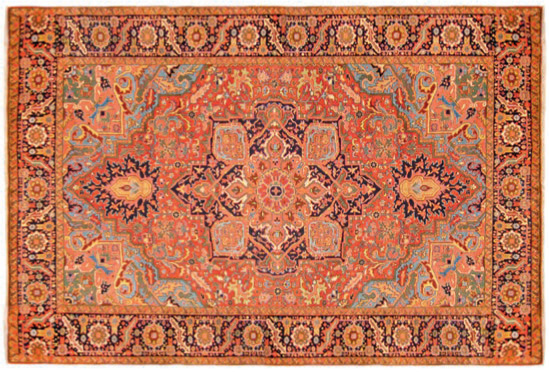
For some collectors, saying that an antique rug is 100 years old is a laughable idea, as they only value rare and prized items from the 18th century and prior, such as a rare Turkish Lotto rug from the 17th to 18th centuries, an ancient Persian Safavid era rug from the 16th to 18th centuries, a European Aubusson or Savonnerie rug from the 17th century, and items of that caliber.
One rug company in particular, Claremont Rugs in California, has famously delineated these collector rug categories into a pyramid that distinguishes between six levels of rug ages:
- Museum Quality (13th to early 19th Centuries)
- High Collectible (early 19th century to circa 1875)
- Connossieur Caliber (circa 1850 to late 19th century)
- High Decorative (circa 1875 to 1910)
- Decorative (circa 1910 to 1970)
- Reproductions (circa 1970 to present)
DECORATIVE RUGS
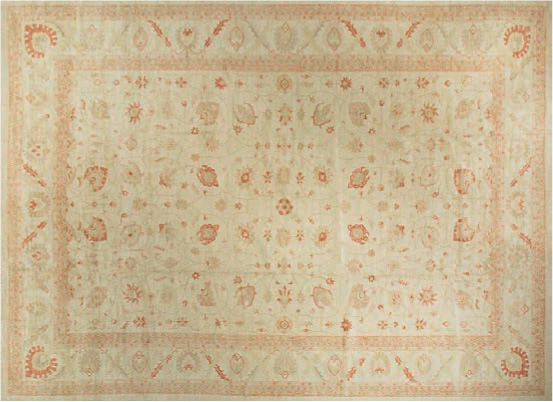
Decorative rugs is a more subjective category, with some people defining it as rugs that fall into the antique and vintage age ranges, or as with Claremont’s pyramid of rug ages, the High Decorative and Decorative ages. For others, the term decorative rugs is more about a rug’s aesthetic characteristics than its age, and refers more broadly to rugs that have a decentralized, large scale design pattern that is more Western European in its flavor, as opposed to a rug with a central medallion and saturated colors, which is more Persian in character.
This kind of decorative rug is generally considered to be easier to use to adorn a home’s interior decor, as it does not have a central medallion, and as such, can more easily have furnishings placed on it any a variety of ways, without the fear of losing the symmetry in the room if the furniture is placed here or there, or if it is put down in one part of the room as opposed to another.
REPRODUCTION RUGS
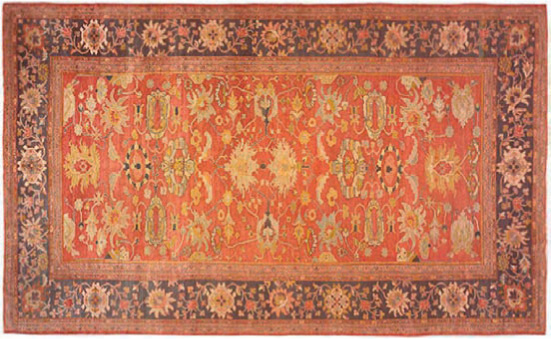
Reproduction rugs are rugs that were woven within the past 50 years or so, typically from the 1970’s to 1980’s and there after, which attempt to recreate or copy the designs of vintage and antique rugs.
These reproduction rugs are not necessarily woven in the same places as the originals. For instance, a Chinese repro ductionrug could replicate the appearance of an antique Persian rug, and an Indian or Pakistani reproduction rug could replicate either an antique Persian or Turkish design.
These reproduction rugs are usually not of the same quality level as the vintage and antique rugs on which they’re based, as the wool, cotton, and other materials of the more recent era are not as fine or as high quality as their predecessors. Similarly, the craftsmanship and quality control of this era is not comparable to the ultra high level hand-knotted rugs made by the master weavers of a century or more ago.
MODERN AND CONTEMPORARY RUGS
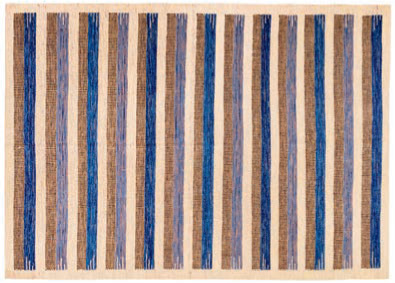
Modern and contemporary rugs are generally understood to be newer production rugs that don’t attempt to replicate the designs or styles of the vintage and antique rugs of yesteryear, but instead, favor a simpler and more current-day aesthetic.
The two terms, modern and contemporary, are sometimes used interchangeably, but within the rug trade, the term modern rugs typically refers to newer rugs that have a very simple and uncluttered aesthetic, with minimal geometric design elements and limited color combinations.
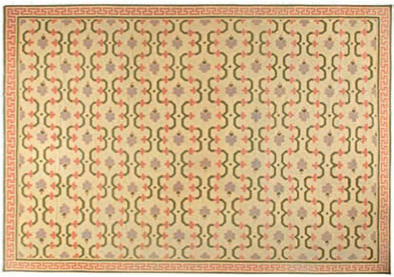
Contemporary rugs are generally considered to be newer rugs that have a little more color and design, often floral motifs. They are not as ornate or complex in their designs as vintage and antique rugs, or even reproduction rugs, but are a step in between, and can sometimes be referred to as transitional rugs.
For more information, visit our website at www.pgny.com.